
4 Years of War in Ukraine: What the Battlefield Tells Us
As Russia’s full-scale war against Ukraine enters its fourth year, discussions about possible peace negotiations and political settlements are gaining momentum. Yet the course of war is not determined by diplomatic rhetoric alone. The reality on the battlefield continues to define the true limits and possibilities of any negotiation process – shaping both Western decision-making and the scope of international support for Ukraine.
Against this backdrop, a public discussion was held to examine what the battlefield is actually dictating today. The event began with the presentation of a new analytical publication based on insights from the Defending Baltics 2025 conference. The publication distills the key lessons of the war in Ukraine and evaluates their implications for security in the Baltic Sea region.
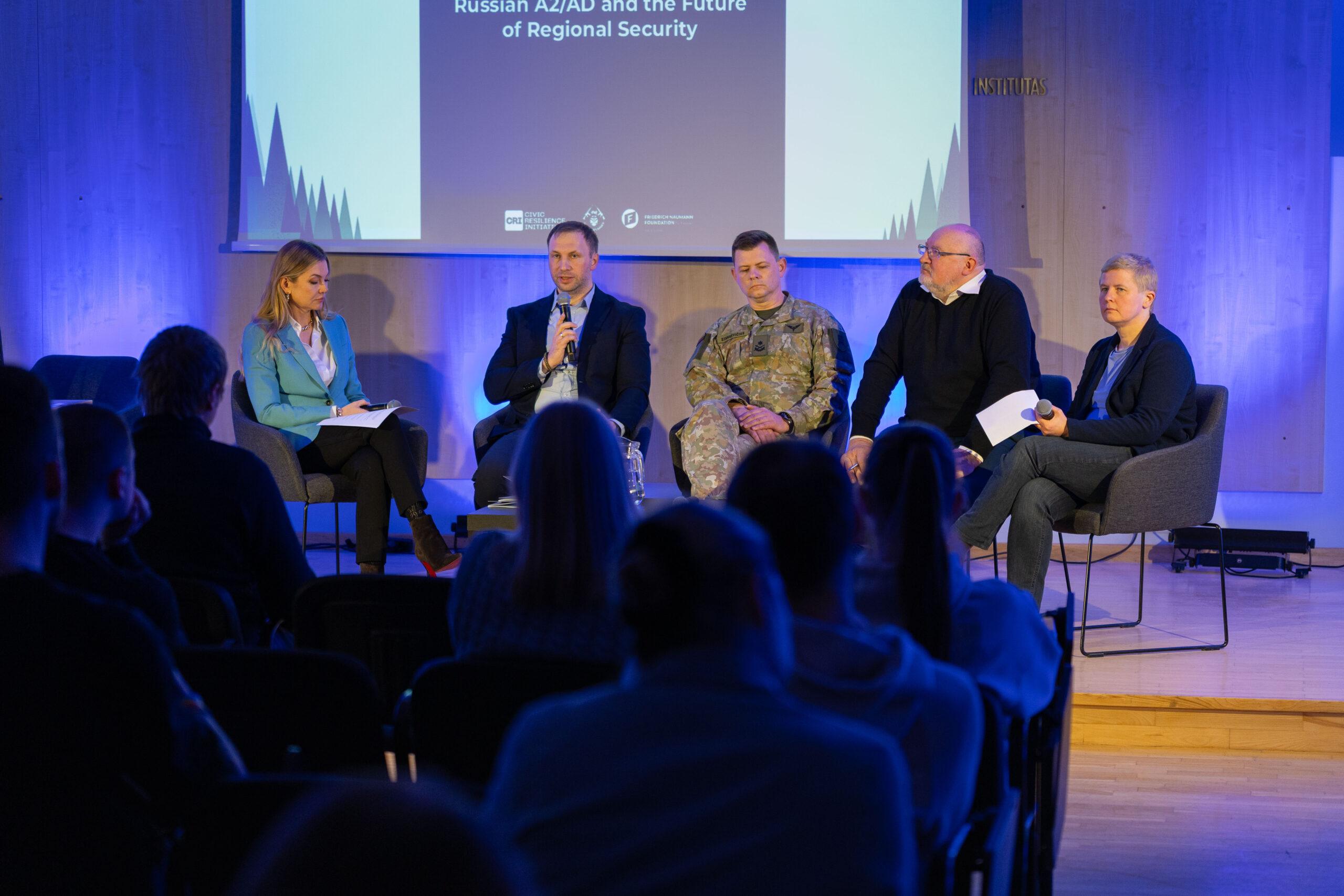
The presentation was followed by a panel discussion bringing together leading experts in security and defence policy, military affairs, and the defence industry. Participants included Prof. Dovilė Jakniūnaitė (Vilnius University Institute of International Relations and Political Science), Artur Plokšto (Advisor to the Minister of National Defence and lecturer at the General Jonas Žemaitis Military Academy of Lithuania), Brigadier General Nerijus Stankevičius, Commander of the Lithuanian Armed Forces Land Component, and Romanas Judinas, analyst at Locked N’ Loaded. The discussion was moderated by Dr. Agnia Grigas, Senior Fellow at the Atlantic Council.
The conversation focused on several critical questions: How does the evolving situation on the front influence Western support for Ukraine? What factors currently shape decisions in Washington, Kyiv, and European capitals? And what do present battlefield realities suggest about possible scenarios for the war’s end?
A number of key conclusions emerged. First, the current dynamics on the front line, combined with strains in the transatlantic relationship, make the prospect of a rapid and sustainable ceasefire – let alone a quick peace – unlikely. Second, Ukraine has demonstrated agency: through its battlefield actions and the steady development of its defence industry with Western support, it is actively shaping the parameters within which negotiations can occur. Third, while a broader strategic understanding of Russia has taken hold across the West, translating that understanding into effective deterrence, preparedness, and credible security guarantees for Ukraine remains an unfinished task. Finally, preparedness itself was underscored as a continuous process – requiring sustained investment, modernization, and constant adaptation to the adversary’s evolving tactics and lessons learned from the battlefield.
The event aimed to return the debate from abstract political speculation to the concrete realities imposed by war – inviting the audience to engage directly, ask questions, and contribute to a grounded and forward-looking discussion.


